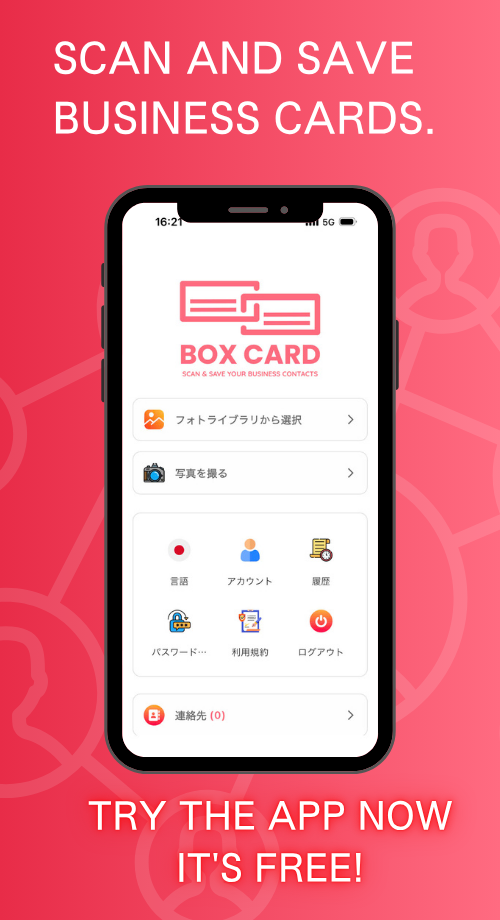
Japan IT Week 2026: Maximize Deal Speed with 5 Free Business Card Scanning Apps
Japan IT Week 2026 highlights how quickly digitizing and acting on large volumes of business cards is key to B2B success, which is why this article compares free, practical scanning apps.
1. Japan IT Week 2026: Business Card Management Determines Success
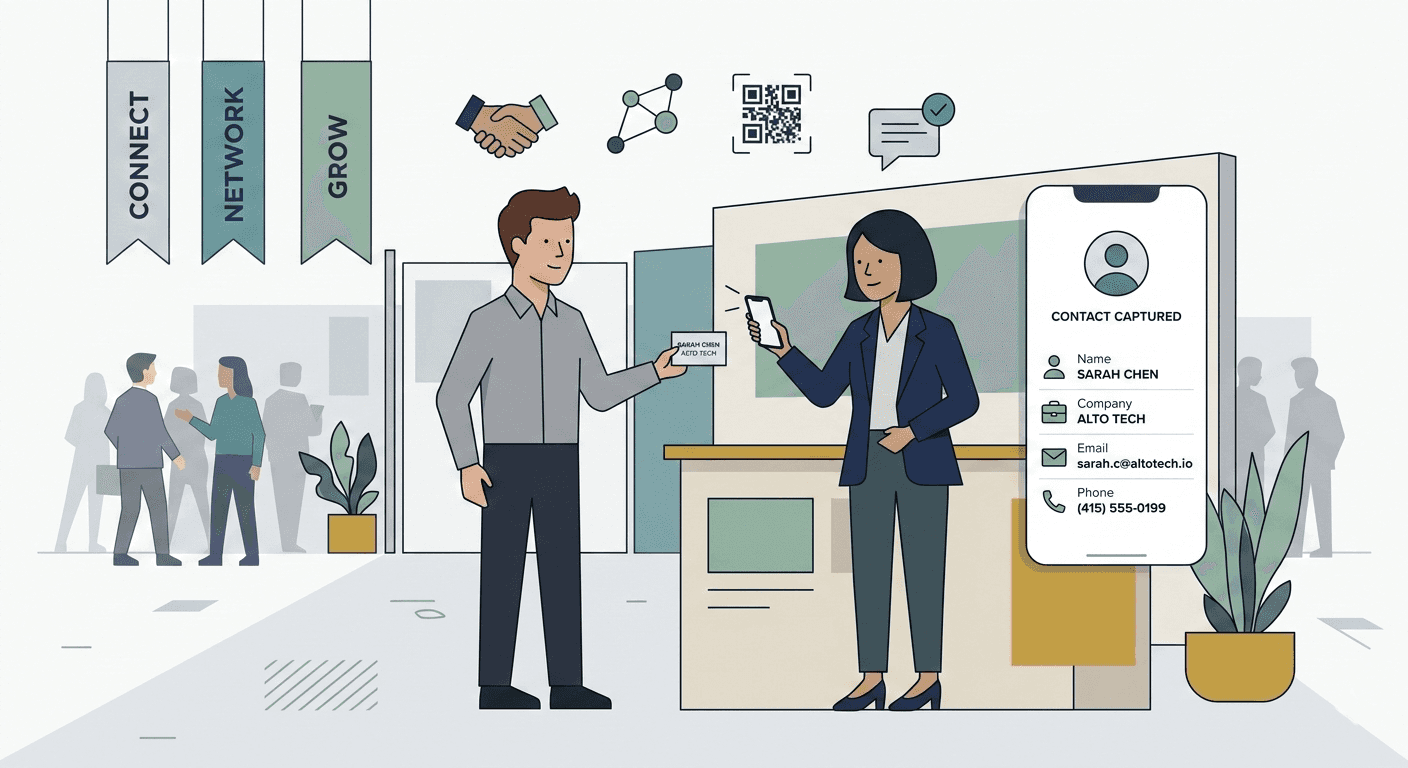
At large-scale exhibitions, particularly in high-traffic areas such as AI/OCR zones and international pavilions, it is common for teams to exchange dozens or even hundreds of business cards within a few hours, often under time pressure and without the ability to pause for detailed note-taking or data entry.
Under these conditions, traditional workflows begin to fail in predictable ways:
- ・Manual input after returning to the office leads to delayed follow-ups, often missing the critical window when the conversation is still fresh in the prospect’s mind
- ・Notes written from memory tend to omit key contextual details, reducing the quality of future engagement
- ・Physical stacks of business cards quickly become unmanageable, making it difficult to prioritize high-value leads
As a result, even strong initial conversations can fail to convert, not due to lack of interest, but due to operational inefficiencies.
Additionally, the Japanese market introduces specific complexities that cannot be ignored when selecting a scanning solution:
- ・Vertical text layouts that differ from Western formats
- ・Complex or uncommon kanji characters that challenge OCR ・systems
- Layered and nuanced job title structures that require accurate parsing
Without OCR capabilities that can handle these elements with sufficient precision, the data captured cannot be reliably used, which ultimately undermines the entire purpose of digitization. For this reason, an exhibition-ready app should be viewed not as a convenience, but as a foundational layer of the sales process itself.
2. 5 Carefully Selected Free Apps That Deliver Real Value at Exhibitions
The definition of a “good” app in an exhibition context is highly specific and differs significantly from everyday use cases; it is not enough for an app to simply be free or feature-rich, it must perform under pressure and integrate seamlessly into fast-paced workflows.
At a minimum, the following three conditions must be met:
- ・The ability to convert physical cards into usable data within seconds
- ・Reliable support for Japanese as well as multilingual inputs in mixed environments
- ・The flexibility to connect captured data directly to follow-up actions, such as CRM systems or outreach workflows
Below are five applications, each with distinct strengths, evaluated from a practical, on-the-ground perspective.
Wantedly People: Handling Volume When Speed Is Non-Negotiable

Wantedly People is designed with a clear priority: maximizing throughput rather than perfecting accuracy, making it particularly valuable in situations where the volume of business cards exceeds the team’s immediate processing capacity.
Key characteristics include:
- ・The ability to scan up to 10 business cards simultaneously in a single capture
- ・Exceptionally fast processing that minimizes waiting time between interactions
- ・A simple and intuitive interface that reduces the need for training
This makes it especially suitable for scenarios such as:
- ・Situations where business cards accumulate faster than they can be processed
- ・Booths with limited staff who cannot dedicate time to manual input
- ・Early-stage collection where the primary goal is to ensure no contact is lost
However, its limitations are equally important to acknowledge:
- ・Extracted data may lack depth or structured consistency
- ・It is not inherently designed for seamless CRM integration
- ・Additional cleaning or enrichment is often required before use
In practical terms, this tool functions as a pressure-release mechanism, clearing the initial backlog so that more refined processes can take over later.
Eight: Accuracy as a Strategic Resource
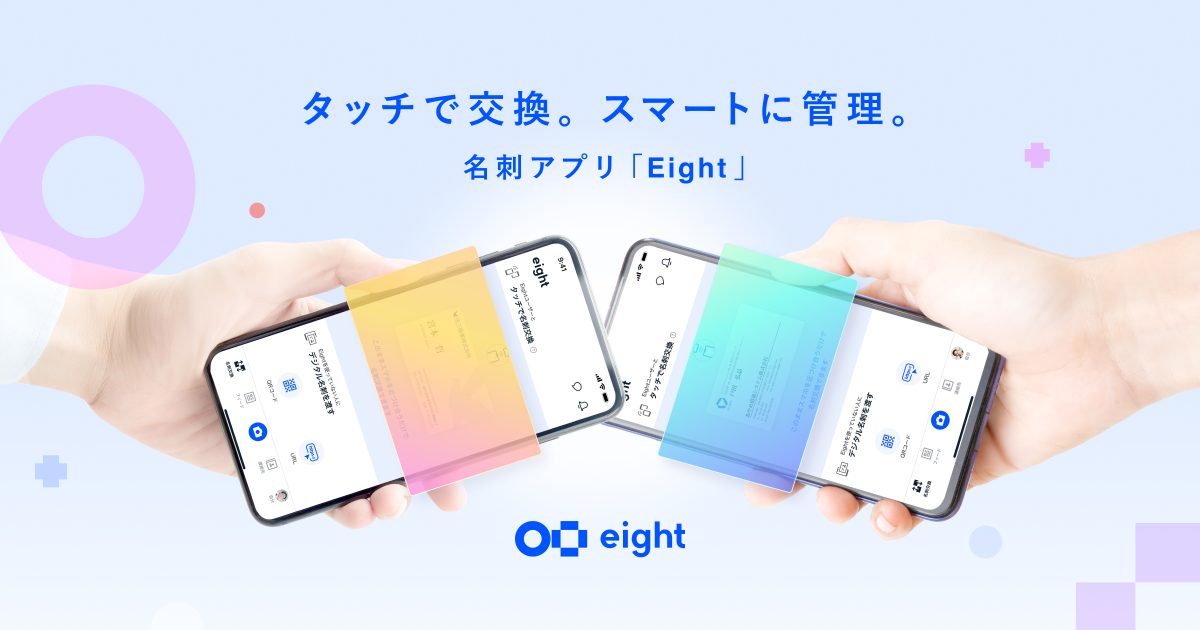
Eight has established itself as a de facto standard within the Japanese market, largely due to its hybrid approach that combines OCR with human verification, resulting in highly reliable data outputs.
Its strengths include:
- ・Exceptionally high accuracy through manual correction processes
- ・Consistent data formatting suitable for long-term storage and use
- ・Strong alignment with relationship management over extended sales cycles
That said, its effectiveness at exhibitions depends heavily on how it is deployed:
- ・Using it for all scanned cards introduces delays that can slow down operations
- ・Reserving it for high-priority or high-value contacts ensures optimal use of its strengths
In this sense, Eight should not be treated as a bulk-processing tool, but rather as a precision instrument applied selectively where data quality is critical.
Boxcard: The Operational Core That Connects Speed and Action

Among all categories, tools like Boxcard occupy the most critical position in modern exhibition workflows, as they bridge the gap between data capture and immediate execution.
The core value proposition is not simply speed or accuracy in isolation, but the ability to transform scanned data into actionable assets without delay.
Key features include:
- ・Immediate structuring of data upon scanning, reducing the need for manual organization
- ・Built-in design for CRM integration, enabling direct transition into sales pipelines
- ・Strong multilingual support, particularly effective in environments where Japanese and international contacts coexist
A typical usage flow during an exhibition would look like this:
- ・Receive a business card during a conversation
- ・Scan it instantly on-site
- ・Push the structured data directly into a CRM system
- ・Initiate follow-up within the same day
The critical strategic decision here is to avoid over-prioritizing perfection:
- ・100% accuracy achieved the next day may result in missed timing
- ・90% accuracy achieved immediately enables proactive engagement
This difference, while seemingly small, often determines whether a lead progresses or disappears.
As a result, this category of tool functions as both:
- ・The fastest way to initiate sales action
- ・The default operational layer for exhibition environments
Download Boxcard today from the Apple Store or Google Store and start improving your contact management workflow.
CamCard: Stability for International Interactions
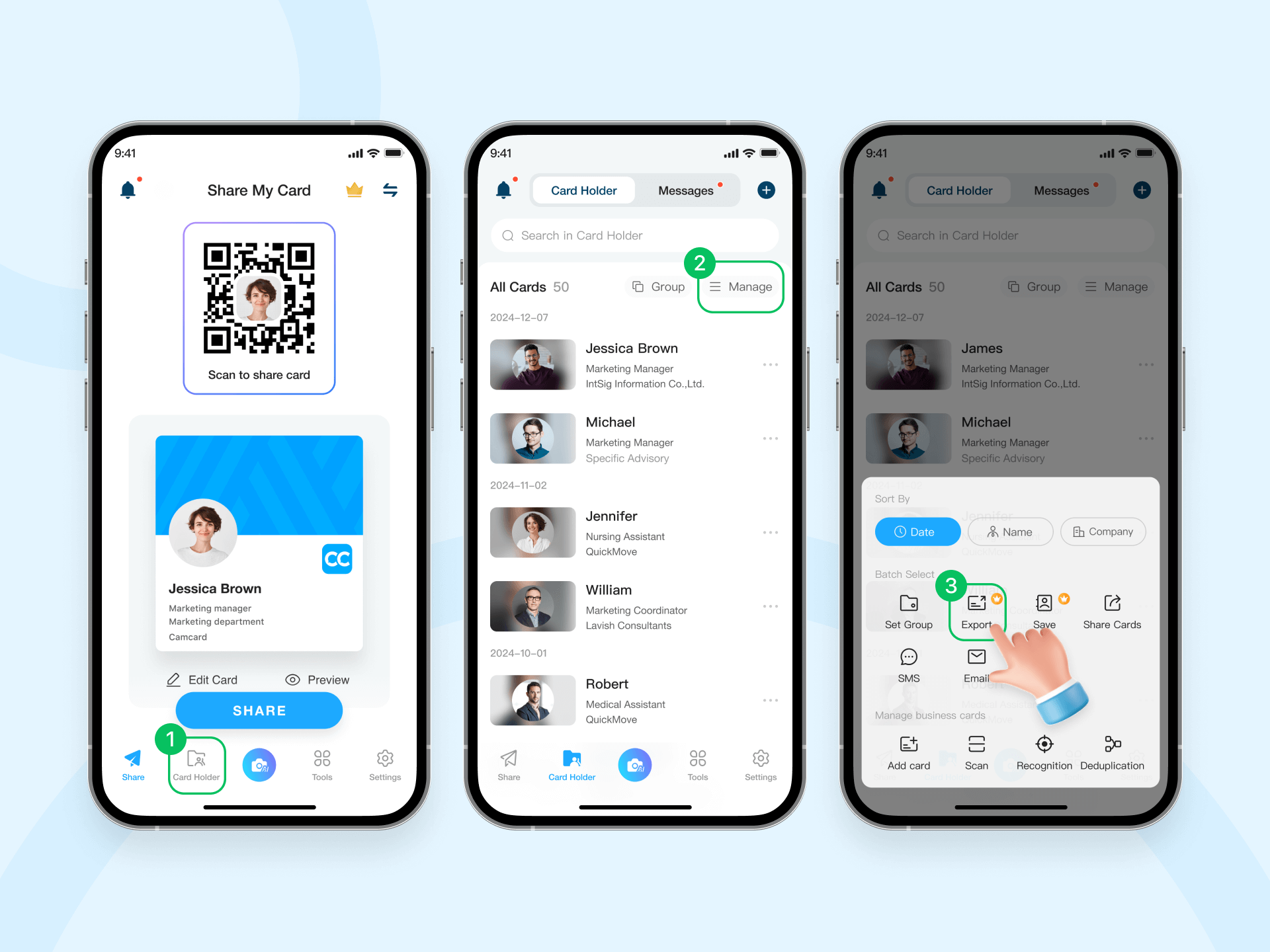
As Japan IT Week continues to attract a growing number of international participants, the need for reliable multilingual support becomes increasingly important, particularly when engaging with overseas companies.
CamCard provides:
- ・Broad multilingual OCR capabilities
- ・A proven track record across global markets
- ・Consistent and stable performance across different card formats
Its primary value emerges in specific contexts:
- ・Business cards in English or Chinese
- ・Interactions with international startups or foreign enterprises
While not always the primary tool, it serves as a dependable fallback in cross-border scenarios.
myBridge: Ensuring Adoption Across Teams

The strength of myBridge lies not in advanced features, but in its accessibility, making it particularly valuable in situations where ease of use directly impacts whether a tool is adopted at all.
Key advantages include:
- ・A clean and simple interface that minimizes user friction
- ・Completely free access without hidden barriers
- ・Low training requirements, enabling immediate deployment
It is especially effective in environments involving:
- ・Part-time or temporary staff
- ・Interpreters assisting with communication
- ・Short-term project teams with limited onboarding time
In exhibition settings, even the most powerful tool fails if it is not consistently used, which makes usability a critical factor that cannot be overlooked.
3. Technical Comparison: Understanding What Actually Matters
While each app offers different specifications, effective decision-making requires understanding how these technical differences translate into operational impact rather than evaluating them in isolation.
App | OCR Accuracy | Speed | Data Usability | Technical Characteristics |
Eight | Very high | Low–Medium | Medium | Human-assisted correction |
Wantedly People | Medium | Very high | Low | Bulk simultaneous scanning |
Boxcard AI | High | High | High | AI structuring + CRM-first design |
CamCard | Medium | Medium | Medium | Multilingual OCR |
myBridge | Medium | Medium | Low–Medium | Simplified architecture |
How Technical Differences Shape Sales Outcomes
The relationship between technology and sales performance is direct and measurable.
When OCR accuracy is high:
- ・The need for manual correction is minimized, reducing long-term workload
- ・Data reliability supports ongoing relationship management
- ・Enterprise-level interactions benefit from increased trust in data quality
- ・However, initial response time may be slower
When speed is prioritized:
- ・Same-day follow-up becomes feasible
- ・Engagement happens while conversations are still fresh
- ・Teams can act ahead of competitors
- ・Some level of post-processing may be required
When data usability is high:
- ・Immediate CRM integration becomes possible
- ・Lead scoring and automation workflows can be triggered instantly
- ・Team-wide data sharing becomes seamless
This shifts the workflow from passive data collection to active pipeline generation.
Designing the Optimal Exhibition Workflow
Attempting to rely on a single tool to handle all requirements often leads to trade-offs that reduce overall efficiency.
A more effective structure separates responsibilities:
- ・Initial capture: prioritize speed (Wantedly People / Boxcard)
- ・Immediate execution: prioritize actionable data (Boxcard)
- ・Post-processing: prioritize accuracy (Eight)
This layered approach allows teams to simultaneously achieve speed, accuracy, and scalability without overloading any single system.
Common Misconceptions in the Field
Several assumptions frequently lead to suboptimal decisions:
- ・High OCR accuracy alone does not guarantee better outcomes
- ・Free tools are not inherently sufficient for high-performance environments
- ・Standardizing on a single solution often creates operational bottlenecks
Exhibition environments are defined by constraints such as time pressure, limited human resources, and the need for rapid follow-up, and systems must be designed with these realities in mind.
4. Practical On-Site Operations at Exhibition Booths
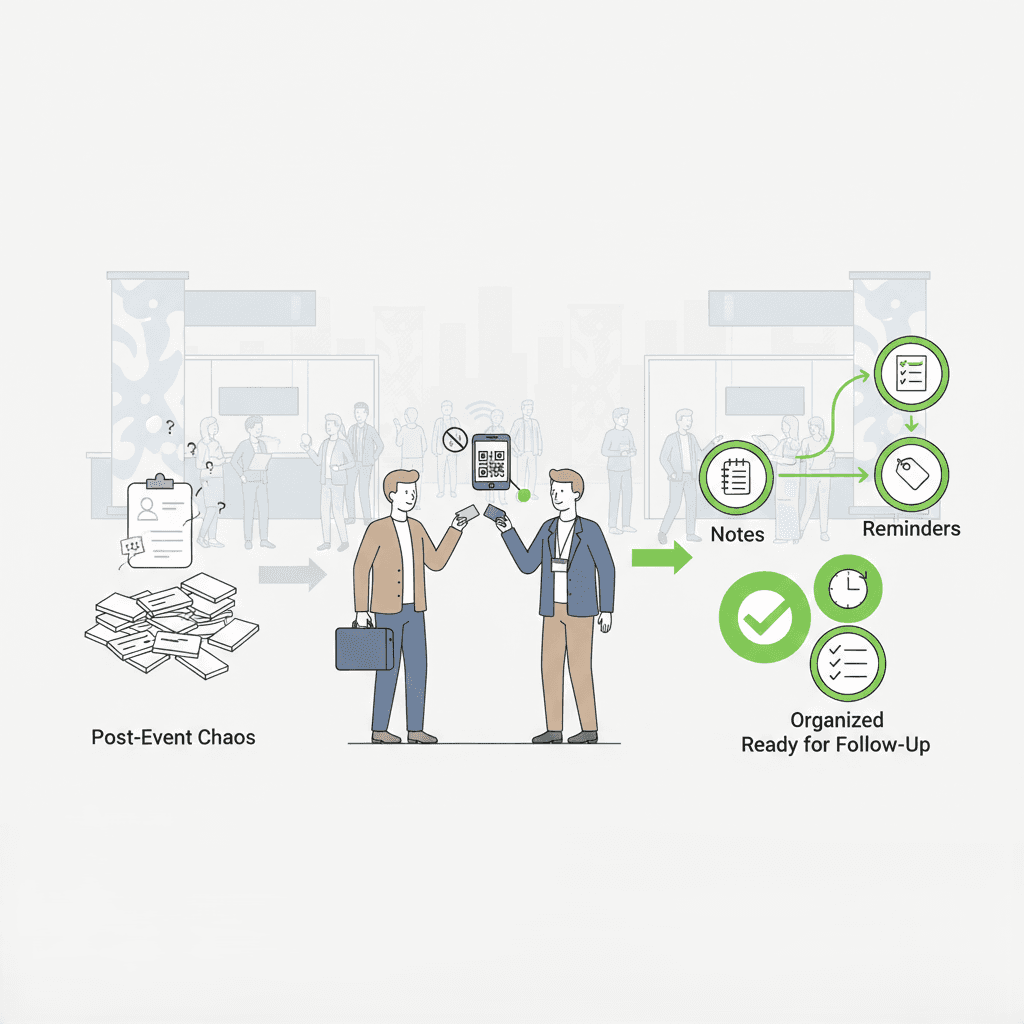
Even the best tools cannot deliver results without proper operational discipline, making workflow design a critical component of success.
At a minimum, teams should enforce the following process:
- ・Scan each business card immediately after it is received, avoiding accumulation
- ・Input brief contextual notes during or right after the conversation
- ・Assign priority tags to distinguish high-value leads from general contacts
The key principle is to eliminate reliance on post-event organization, as delays in processing often lead to lost context and reduced engagement quality.
5. Data Security and Personal Information Protection in Japan
Business card data is classified as personal information in Japan, and its handling is subject to strict expectations regarding security and compliance.
Organizations should ensure:
- ・Secure cloud storage with appropriate safeguards
- ・Clearly defined access control to prevent unauthorized usage
- ・Structured processes for data integration and deletion after events
When multiple team members are involved, establishing clear operational rules becomes essential to maintaining consistency and compliance.
Success at Japan IT Week Spring 2026 depends not just on the number of connections made, but on how effectively those connections are captured, processed, and turned into action; the right tool depends on your goal, with Eight suited for building reliable networks in Japan, Wantedly People for handling high-volume, fast-paced environments, and Boxcard for enabling immediate, action-ready workflows across Japan–Vietnam contexts. As opportunities unfold in real time, the ability to respond quickly becomes a key competitive advantage, and having the right tools in place allows teams to move beyond simple data collection toward a more seamless and responsive form of digital engagement.