Singapore Business Networking Events 2027: Top Events for Entrepreneurs and Business Leaders
This guide lists the Singapore networking events entrepreneurs and business leaders should consider for 2027, explains who benefits from each event, and gives a practical playbook for preparing, networking on site, and following up — including how to use Boxcard to capture and manage contacts.
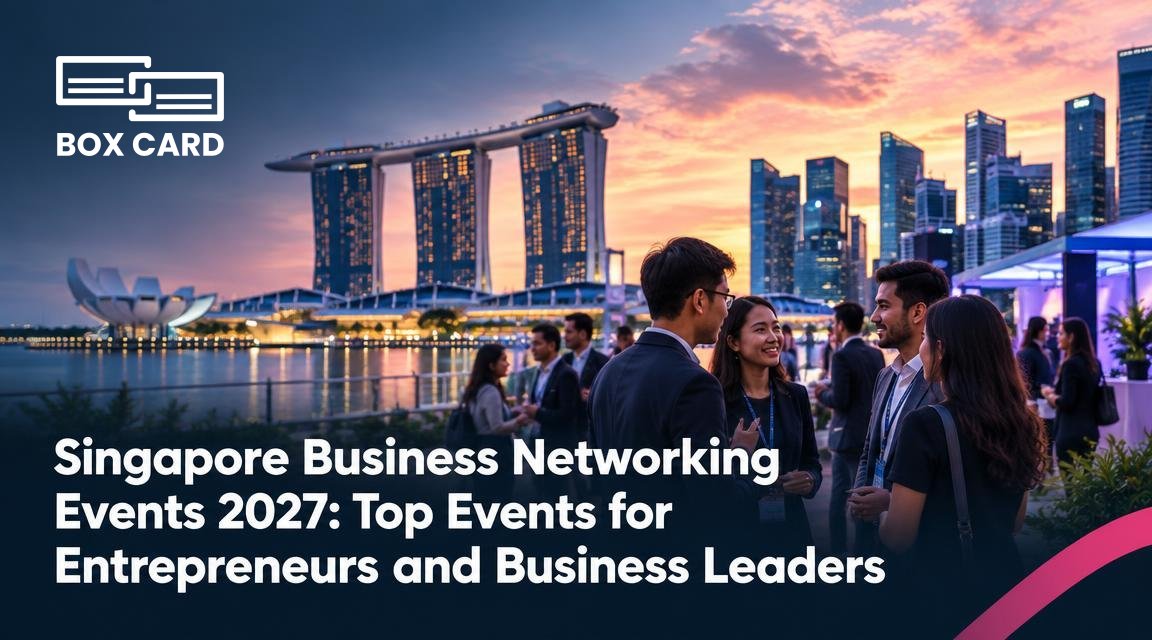
Choosing which Singapore networking events to attend in 2027 can feel like a high-stakes puzzle: time is limited, tickets cost money, and the right contacts matter. This article helps you pick the events most likely to connect you with investors, partners, customers, or hiring contacts. It lists the recurring, high-value gatherings that entrepreneurs and business leaders typically target, explains who should attend each, and gives practical steps for preparing, networking on site, and following up effectively.
Events worth considering in 2027
Singapore FinTech Festival (SFF)
What it is: The region's largest fintech gathering. Themes usually include payments, banking technology, crypto and regulation, insurtech, and financial inclusion.
Who should attend: Startups and scaleups in fintech, payments vendors, banks seeking partnerships, policy teams, and investors focused on financial services.
What to expect: A mix of keynotes, panel discussions, demo areas, and investor/industry matchmaking. Plenty of regulator and corporate attendance, which makes it useful for fundraising and product pilots.
Singapore Tech Week
What it is: A broad technology week with panels, workshops, and sector-specific tracks covering enterprise IT, AI, cloud, and public sector innovation.
Who should attend: Technology founders, CTOs, product leaders, and executives looking for enterprise contracts or government procurement pathways.
What to expect: Technical sessions, vendor exhibitions, and closed roundtables for C-level attendees. Good for meeting potential enterprise customers and tech partners.
SWITCH, Singapore Week of Innovation and Technology
What it is: An innovation-focused event with a strong startup and deep tech angle. It brings together founders, researchers, corporates, and investors interested in commercializing research and connecting with startups.
Who should attend: Deep tech founders, university spinouts, corporate innovation teams, and investors interested in R&D partnerships.
What to expect: Demo stages, investor pitches, and matchmaking for tech transfer and corporate pilots.
Innovfest Unbound
What it is: A startup-centric festival that mixes curated content, investor programming, and startup showcases. Often emphasizes regional connections across Southeast Asia.
Who should attend: Early-stage founders looking for investor introductions, PR visibility, or regional expansion partners.
What to expect: Pitch competitions, mentor sessions, and networking formats designed to surface high-potential startups.
CommunicAsia, BroadcastAsia, NXTAsia
What it is: A cluster of trade shows focused on telecoms, media, and content distribution technologies. Good for companies in connectivity, cloud media, and streaming technology.
Who should attend: Vendors selling telecom or media infrastructure, enterprise buyers, channel partners, and content owners.
What to expect: Large exhibition floors, product demos, technical briefings, and vendor-customer meeting slots.
Slingshot
What it is: A startup competition and showcase with a strong emphasis on discovering high-potential startups from Asia and beyond. It attracts corporates and investors searching for new deals.
Who should attend: Seed to Series A founders who want exposure to investors and potential corporate customers.
What to expect: Stage pitches, curated meetings, and investor office hours. Good for high-impact exposure in a short time.
TiE Singapore and founder networks
What it is: Founded entrepreneur networks that run regular meetups, mentorship programmes, and networking dinners. These are less flashy than festivals but often higher value for sustained relationships.
Who should attend: Founders who want mentoring, introductions to local angels, and long-term peer networks.
What to expect: Smaller rooms, mentorship clinics, pitch nights, and member-only networking sessions.
How to choose which events fit your goals
Match each event against three practical criteria:
- Primary goal: Fundraising, sales, partnerships, hiring, or PR. Pick events where buyers or investors for your stage typically show up.
- Relevant audience: Sector focus matters. An enterprise AI vendor gets more value from Singapore Tech Week than a marketing app does.
- Time and follow-up capacity: Networking does not end at the booth. If you cannot follow up with leads within a week, attend fewer, more targeted events.
Decision rule examples: If you are pre-revenue and need seed capital, prioritize startup showcases and pitch tracks. If you are scaling sales to enterprises, buy a small number of meeting-heavy tickets for enterprise-focused conferences.
Practical preparation before the event
Good preparation converts casual handshakes into deals. Use this checklist:
- Set 2 to 3 clear objectives for the event: for example, get five investor intros, schedule three pilot conversations, or hire one senior engineer.
- Book meetings in advance. Reach out to speakers, partners, and attendees on LinkedIn or via the event app and suggest specific times.
- Prepare a one-page leavebehind that states your value proposition, traction highlights, and next steps. Have both PDF and physical copies.
- Update your pitch and demo to fit short meeting slots. Practice a 60-second hook, a three-minute problem-solution pitch, and a five-minute product demo.
- Bring business cards and a plan to digitize them immediately. If you use Boxcard, scan cards on the spot to avoid lost leads and to tag contacts by event and interest.
Networking tactics that work on site
- Quality over quantity. Aim for meaningful 10 to 15 minute conversations that end with a clear next step.
- Ask targeted questions: what are your current priorities, what gaps are you trying to solve, who else should I speak with?
- Use micro-commitments: get a calendar invite, a warm introduction, or agreement to review a one-pager immediately after the event.
- Capture context with every business card: note where you met and the agreed next step. A quick voice note or short text captured with a contact scan saves time later.
- Attend evening mixers and smaller roundtables. Senior executives often skip big exhibition floors but join private dinners or late mixers.
Follow-up plan and measuring ROI
Follow-up speed correlates with conversion. Use this simple timeline:
- Within 48 hours: Send a personalized message that references your conversation and propose a specific next step.
- Within one week: Attach the one-pager and, if appropriate, a short demo recording or data sheet.
- Two to four weeks: Book follow-up meetings for pilots, due diligence, or deeper demos.
Measure event ROI with these metrics: number of qualified leads, number of follow-up meetings scheduled, pilot agreements signed, and conversion to paying customers or investors. Track time spent on follow-up to assess cost effectiveness.
When an event is not the right choice
Do not attend for FOMO. Skip events when:
- You cannot commit to follow-up. Leads sitting in an inbox are wasted effort.
- The attendee profile does not match your buyer or investor type.
- The cost of travel and tickets exceeds your expected value and you have nearer-term alternatives, such as targeted customer visits or investor roadshows.
A useful rule: pick fewer events and prepare twice as well for each. One well-executed event with follow-through beats five half-hearted appearances.
Use Boxcard to make networking sticky
Boxcard helps after the handshake by turning paper cards into organized contacts. Scan cards at the event, tag them by event and interest, and add the meeting notes and follow-up tasks. That way you avoid lost contacts and maintain a clear pipeline from event to outcome. For founders and business leaders who rely on fast follow-up, a contact capture workflow removes a small but costly friction point.
Decide now which two to three events align with your highest priorities, book meetings early, and commit to a disciplined follow-up schedule. That sequence turns conference time into measurable progress for your company.