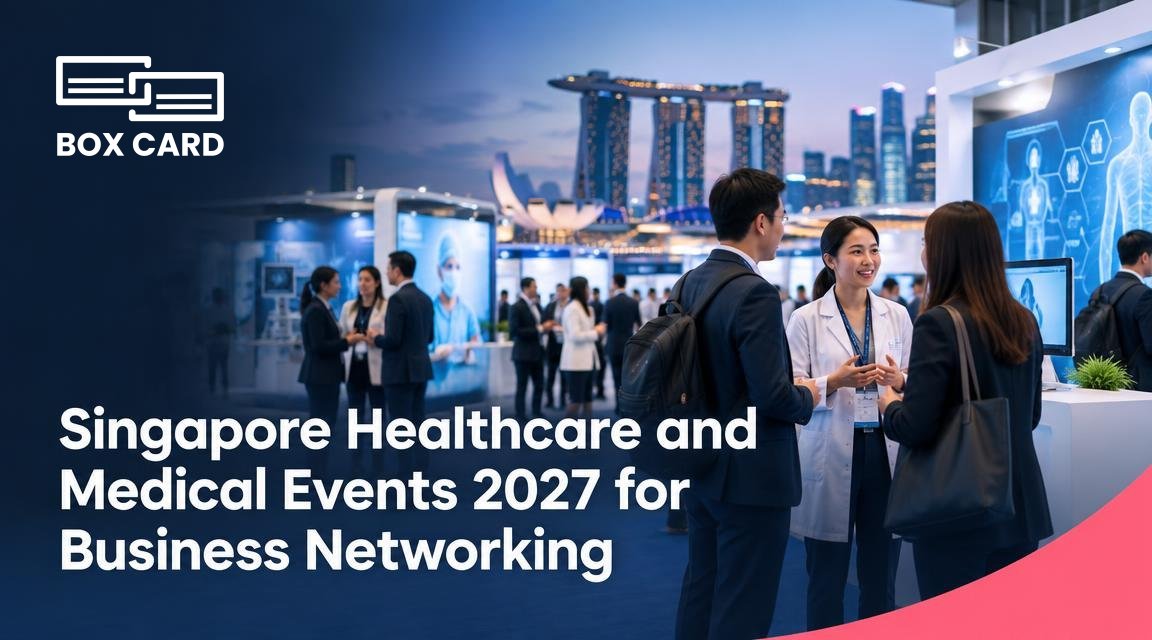
Singapore Healthcare and Medical Events 2027 for Business Networking
To network effectively in Singapore in 2027, choose events by the specific contacts you need, prepare targeted outreach and assets before arrival, capture and tag contacts digitally at the event, and follow up within 48 hours with a clear next step.
Which Singapore healthcare and medical events should you target in 2027, and why it matters
You want to meet clinicians, medtech buyers, investors, hospital procurement officers, or potential partners in Singapore. Picking the right events and preparing for them separates a few useful leads from a stack of collected business cards. This guide lists the kinds of events to watch in 2027, how to choose between them, and practical steps to maximize networking impact before, during, and after each event.
Types of events and what each delivers
Not every event yields the same contacts or opportunities. Decide what outcome you need, then choose the event type that produces it.
| Event type | Who you will meet | Best for |
|---|---|---|
| Major industry conferences | Hospital executives, regulators, regional distributors, large suppliers | Brand visibility, partnerships, enterprise sales conversations |
| Trade shows and exhibitions | Buyers, procurement teams, clinical end users, product managers | Product demos, lead generation, channel recruitment |
| Investor and startup showcases | Venture capital, corporate venture arms, angel investors, other founders | Fundraising, strategic introductions, recruitment |
| Academic conferences and symposia | Researchers, clinicians, clinician-scientists | Clinical trials, research collaborations, validation |
| Meetups and sector-focused workshops | Practitioners, early adopters, implementers | Product feedback, pilot customers, grassroots adoption |
Recurring events to watch in Singapore
Singapore hosts regional healthcare events each year, from trade exhibitions to digital health summits and medtech forums. Typical names to monitor are Medical Fair Asia, HIMSS Asia Pacific related events, and regional medtech summits organised by industry bodies. Also watch university medical school seminars, hospital grand rounds, and startup pitch programs hosted by local accelerators and investor networks. Check organiser websites and event platforms for official 2027 listings and registration windows.
How to choose which events to attend
- Match audience to goal: If you need procurement approvals, prioritise hospital-focused conferences or procurement panels. If you need seed funding, investor showcases and demo days are better.
- Consider timing and budget: Large conferences cost more but reach a broad audience. Smaller, focused workshops cost less and produce higher quality conversations per hour.
- Geography and regional reach: Singapore is a regional hub. If you want Southeast Asia access, choose events explicitly marketed to Asia Pacific attendees.
- Stage fit: Early product validation benefits from clinician meetups and academic events. Commercial scale requires trade shows and partner meetings.
Prepare before the event
Preparation turns chance conversations into qualified leads.
- Set clear objectives: Pick three measurable goals for the event, for example: obtain five clinical pilot leads, one distribution partner, and two investor meetings.
- Research the attendee list and speakers: Identify five people you must meet. Look for session topics that attract your target audience and prebook meetings if the platform allows.
- Create a concise outreach message: Use a short, specific introduction plus one ask. Example: "Hi Dr. Tan, I build a patient-monitoring device that reduces false alerts by 40 percent in pilot studies. Can we meet for 15 minutes at the conference to discuss trials at your hospital?" Keep it factual and relevant to their role.
- Prepare assets: One-page product sheets, a 60-second demo pitch, and a single-slide ROI claim are enough. Make digital versions ready for immediate sharing.
- Digitize networking tools: Bring a fast way to capture contacts. Digitize business cards or use an app to scan and tag leads. Mentioning Boxcard: using a business-card scanning tool can speed follow-up and reduce manual data entry after long days on the show floor.
Networking onsite: tactics that work
- Start early in sessions: Arrive before a session starts to talk to speakers and early attendees. Post-session questions can lead to deeper conversations.
- Keep conversations outcome-oriented: Ask what problem they want to solve and offer one relevant way you can help. If you need a follow-up, agree on a specific next step and timeline.
- Use demos sparingly: Live demos are powerful but time-consuming. Save demos for prebooked meetings or booth visitors who show clear interest.
- Work the breaks: Coffee queues, lunch tables, and airport-style lounges are where informal but high-value introductions happen.
- Quality over quantity: Meeting fewer, relevant people yields better outcomes than collecting many business cards.
Follow-up: convert contacts into opportunities
- Within 48 hours: Send a personalized email referencing your conversation, attach the one-page sheet, and propose a single next step such as a 20-minute call or a pilot framework.
- Segment leads: Tag contacts by priority: hot (pilot or meeting within 2 weeks), warm (explore in a month), and cold (keep in nurture list). This helps allocate follow-up effort.
- Use a simple tracking sheet or CRM: Track outreach attempts, replies, and agreed actions. For small teams, a shared spreadsheet with dates and next steps is fine.
- Offer value in follow-up: Share a relevant case study, an executive summary of clinical evidence, or a connection to a helpful contact. Value drives replies.
- Respect privacy and consent: Confirm permission before adding contacts to marketing lists or shared databases. This matters in healthcare settings where data handling is sensitive.
Common mistakes to avoid
- Chasing quantity over quality. A few well-qualified meetings beat hundreds of unqualified leads.
- Following up with a generic note. Personal detail from the conversation increases response rates.
- Neglecting logistics. If you plan demos or device trials, confirm power, table space, and approvals in advance.
- Failing to ask for a next step. If you do not ask, many busy contacts will not propose one.
Practical checklist for your 2027 Singapore event
- Define your three objectives for the event.
- Identify five must-meet people and reach out ahead of time.
- Prepare one-page product and pilot documents in digital form.
- Bring a business-card scanning solution and tag leads on the spot.
- Schedule follow-up times on your calendar before leaving the venue.
Singapore will continue to be a regional hub for healthcare conversations in 2027. The difference between a productive trip and a forgettable one is choosing the right event for your goals, preparing targeted outreach, and following up with clarity and speed. Start by listing concrete outcomes you need from the trip, pick the event types that match those outcomes, then use the checklist above to turn introductions into pilots, partnerships, or term sheets.