Singapore Manufacturing and Industrial Events 2027 for B2B Networking
Choose three complementary events to target in 2027: a demo-focused trade show, a conference for thought leadership, and a vertical sector gathering. Prepare targeted meetings in advance, capture contacts digitally with a tool like Boxcard, and follow up within 24 hours with tailored materials to convert conversations into pilots and deals.
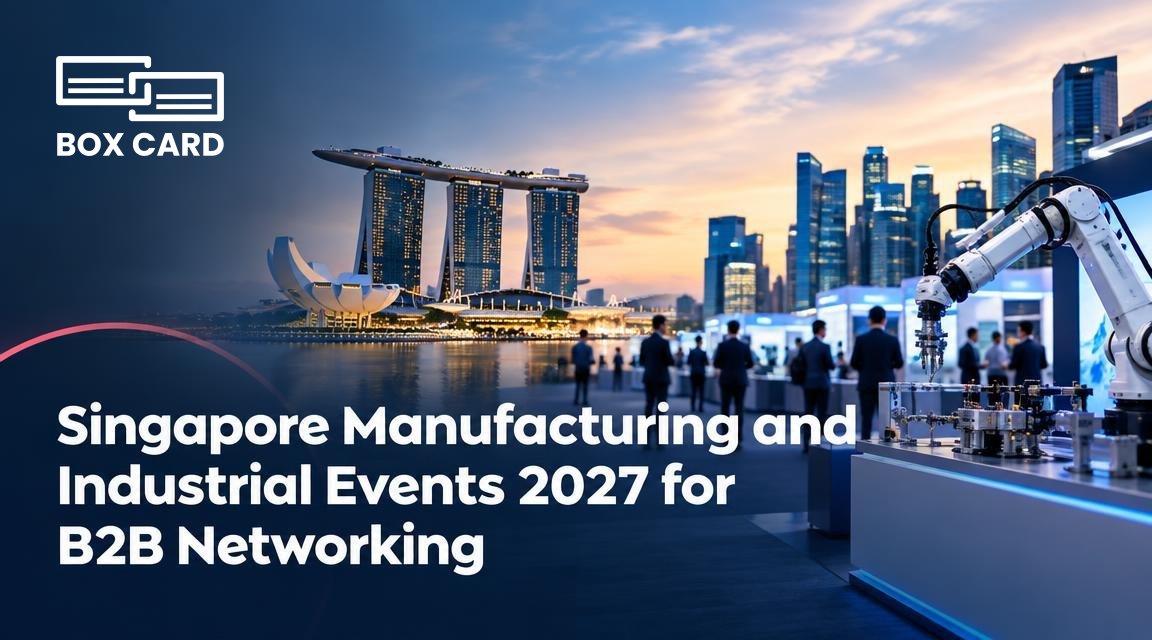
You need productive, business-focused networking at Singapore manufacturing and industrial events in 2027. You do not want to collect stacks of business cards that never convert, or spend time at shows that attract the wrong audience. This article helps you pick the right events, prepare for meetings that close deals, capture contacts reliably, and build a repeatable follow-up process that turns conversations into projects.
What kinds of Singapore events actually produce B2B leads
Not all industry gatherings are equal for B2B outcomes. Pick events intentionally, based on the outcome you need.
- Trade shows with live demos: Good when you need to show equipment, automation, robotics, or prototype workflows. Buyers expect hands-on demonstrations.
- Conference tracks and technical sessions: Better for establishers of thought leadership, solution architects, and companies selling high-value services. Sessions bring qualified contacts who want technical depth.
- Vertical sector gatherings: Events focused on energy, water, maritime, or logistics draw domain buyers. If your product targets a specific industry segment, these are higher-conversion opportunities.
- Closed-door or buyer-seller programs: Invitation-only matchmaking and buyer meetings cut through noise, producing fewer but warmer leads.
- Startup showcases and innovation forums: Useful when you want pilots, proof of concept partners, or investor attention rather than immediate sales.
Events to watch in Singapore for manufacturing and industrial tech
Below are recurring event names and what they tend to deliver for B2B networking. When planning a 2027 calendar, check organisers and event programmes for the edition that year.
- Industrial Transformation ASIA-PACIFIC, a wide industrial technology and factory automation showcase: good for vendors of IIoT, automation, digital twin technologies, and for meeting regional manufacturing managers.
- Singapore International Water Week, focused on water technology, resource management, and industrial water solutions: strong for process engineers, utilities, and project procurement teams.
- Singapore International Energy Week, where energy transition, grid technologies, and industrial energy efficiency are discussed: useful for companies selling energy management and plant optimization.
- Asia Pacific Maritime, for shipyards, maritime equipment, and port automation: relevant if you serve marine manufacturing or logistics operations.
- TechInnovation, a marketplace for corporate and research partnerships: good for R and D partnerships, licensing discussions, and pilot projects.
- Asia Tech x Singapore, a technology conference that brings regional buyers, integrators, and platform vendors together: good for SaaS, analytics, and platform plays used in manufacturing.
How to choose which events to attend
Use a decision checklist instead of gut feeling.
- Audience fit, ask which job titles and buying roles will attend. If you need plant managers and procurement leads, prefer shows with an industrial buyer profile.
- Stage fit, match event type to sales stage. Demos at trade shows, thought leadership at conferences, pilots via innovation forums.
- Cost versus opportunity, estimate total cost per qualified meeting: exhibit fees and travel, versus expected number of executive meetings you can schedule in advance.
- Co-location and timing, a show that runs alongside complementary events gives access to a broader audience. Also avoid overlapping internal deadlines that reduce your team availability.
- Availability of matchmaking programmes, events that allow you to pre-book meetings or access buyer lists reduce cold outreach time on site.
Pre-event preparation: checklist and templates
Preparation separates companies that close business from those that collect cards. Use this checklist the month before the event.
- Define measurable goals, for example: 12 qualified demos, 5 decision-maker meetings, and 20 marketing-qualified leads.
- Create a target account list, with priority tiers and decision-maker names where available. Use LinkedIn and industry directories to populate it.
- Schedule meetings in advance, email or LinkedIn outreach with three proposed time slots. Offer short demo windows and an option for an after-show meeting.
- Prepare 60-second and 10-minute pitches, tailored to operations, IT, and procurement audiences.
- Demo readiness, ensure hardware, network connectivity, and demo scripts are tested in the actual venue layout if possible.
- Lead capture plan, decide how you will capture contact details. Options: badge scans, QR forms, and physical cards digitized with a tool like Boxcard for fast, accurate transfer into CRM.
- Brief the team, assign roles: greeters, demo owners, technical escalations, and meeting closers. Provide templates for follow-up emails and meeting notes.
Networking tactics that win meetings and pilots
At the event use focused tactics rather than broad outreach.
- Prebooked sessions, prioritize the meetings you scheduled ahead. Treat them like client meetings: arrive early, confirm agenda, and state next steps at the end.
- Micro-demos, 8 to 12 minute demos at the stand, followed by a 5 minute Q and A. Short, practical sessions show real value and respect the buyer's time.
- Host a roundtable, small invite-only sessions on a specific problem attract serious buyers. Use a case study and allow 30 minutes for discussion and 15 minutes for networking.
- Use the floor to qualify, ask two priority questions early: what problem are they trying to solve, and what is their decision timeline. That identifies warm leads quickly.
- Collect contacts reliably, use digital capture. Photograph cards and digitize immediately with an app like Boxcard, then tag leads by priority and interest so the CRM handoff is clean.
Follow-up sequence that converts event contacts into deals
Most event leads go cold because the follow-up is slow or generic. Use this tested sequence.
- Within 24 hours: Send a personalized thank-you note referencing the specific topic you discussed. Include a short one-page recap or a 2 minute video demo link.
- 3 to 7 days: Deliver the promised content, such as a case study, technical sheet, or proposal outline. Suggest a 30 minute next-step call and propose two calendar slots.
- 2 weeks: Follow up with a concise reminder and an added value item: a pilot offer, data sheet, or ROI calculator tuned to their case.
- 4 weeks: If still no response, provide a final check-in and propose a low-commitment pilot or site visit. Archive the contact if silent, but add to a nurture stream for future campaigns.
How to measure event ROI and decide whether to return
Measure outcomes against the goals you set.
- Lead quality, count meetings with decision-makers, qualified demos, and pilot requests.
- Sales pipeline value, track value and probability of deals that originated at the event.
- Cost per qualified meeting, total spend divided by qualified meetings gives a comparable metric across events.
- Time to conversion, measure how long event leads take to move from contact to sale. Some events produce quicker pilot commitments than others.
Practical next step
Choose three events to target for 2027: one trade show for demos, one conference to build thought leadership, and one vertical event that reaches your core buyer. Build a 12-week plan for each: outreach, scheduled meetings, demo scripts, and a contact-capture method using a digital tool like Boxcard to avoid manual re-entry. After each event, run a 1 hour debrief with your team to capture what worked and what to change for the next show.
Good event ROI comes from fewer, better conversations: prepare targeted meetings in advance, capture contact details immediately, and follow up with substance within 24 hours.